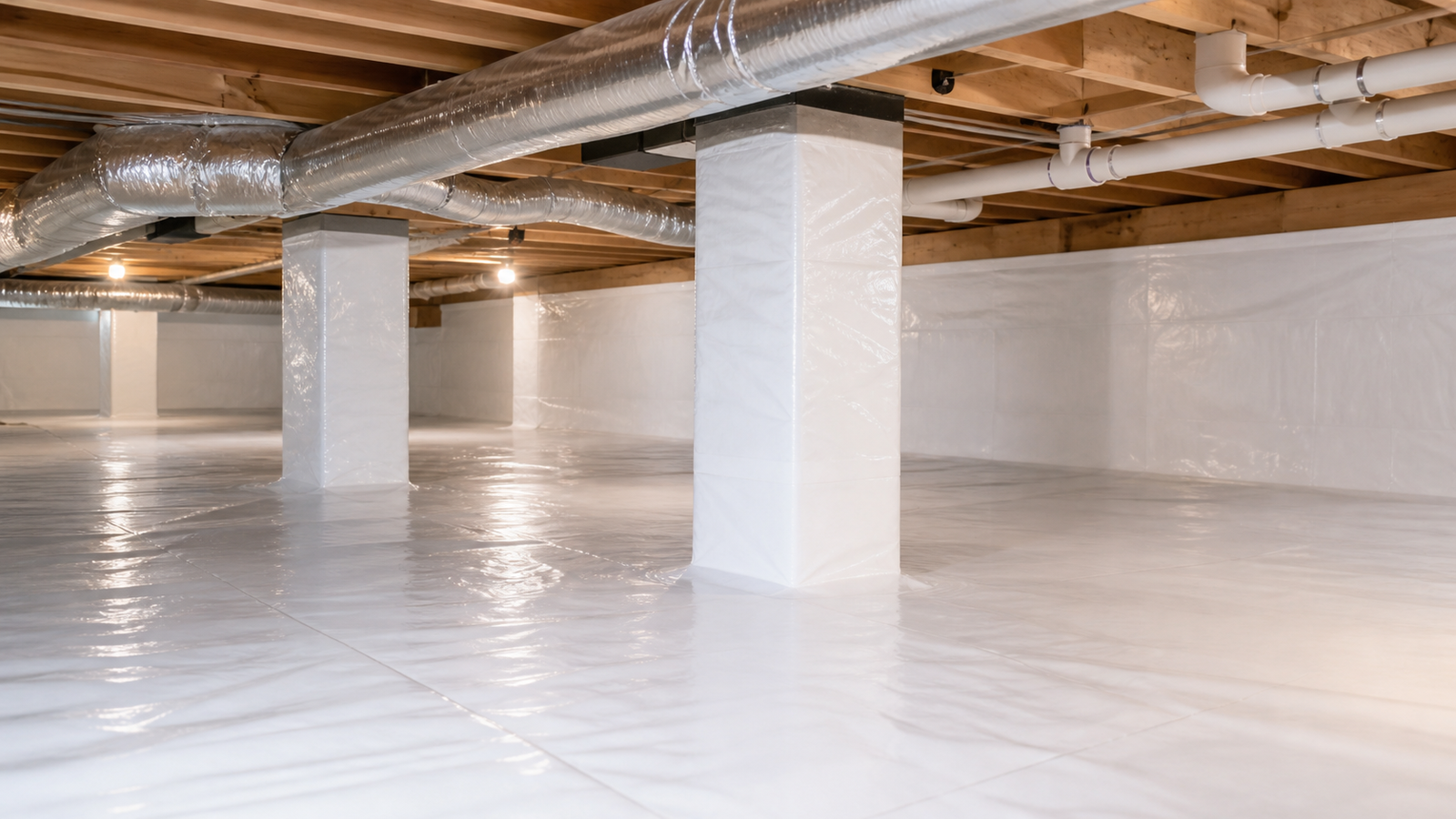
Trussville crawl spaces often stay damp because humid outside air, exposed soil, shaded foundation areas, poor drainage, or open vents keep moisture below the home after rain. Encapsulation helps most when the source of moisture is identified first. A homeowner should schedule a crawl space inspection if they see odors, wet insulation, condensation, standing water, soft flooring, or visible wood deterioration.
Vulcan Crawlspace Co. works with homeowners in Trussville and the Birmingham metro who need to understand crawl space moisture, drainage, vapor barrier, humidity, and repair questions before choosing a system. The useful starting point is a clear inspection, then a scope that matches what is actually happening under the home.
Trussville moisture problems often need crawl space humidity control to work with vapor barrier, drainage, and vent sealing details.
Quick Reference: Trussville Moisture Clues
| Local clue | Possible cause | Inspection focus |
|---|---|---|
| Dampness after rain | Storm runoff or slow-drying soil | Drainage, grading, and foundation edges |
| Odor during humid weather | Vented crawl space air or damp insulation | Vents, insulation, and humidity readings |
| Moisture on shaded lots | Limited drying under the home | Air movement, soil, and liner coverage |
| Soft floors or staining | Moisture may be reaching wood framing | Joists, subflooring, and support areas |
Trussville Homeowner Checklist
- Track whether dampness follows storms
- Look for wet insulation or muddy soil
- Check open vents and access gaps
- Ask whether drainage comes before encapsulation
- Use photos to compare inspection findings with the proposed scope
Trussville Moisture Priority Chart
| Priority level | When it fits | Best next step |
|---|---|---|
| Lower | Dry framing and no recurring odor | Monitor seasonally |
| Moderate | Odor, damp soil, or condensation | Inspect moisture source |
| Higher | Standing water, wet insulation, soft floors | Plan drainage and repair review before sealing |
Why moisture lingers below Trussville homes
This can happen when humid Birmingham metro air enter vented crawl spaces and cool below the floor system. The review should include exposed soil, shaded lots, slope, and slow-drying foundation edges. Moisture can remain in joists, insulation, and ground cover after storms. The practical order is to identify the water source first and choose the system second. The main takeaway for Trussville-area homeowners is to connect the symptom with the cause before choosing a solution. The same visible issue can come from ground vapor, outside air, drainage, damaged insulation, or wood moisture, and each one changes the right next step.
What warning signs homeowners should check first
The list should include musty odors, condensation on ducts, wet or fallen insulation, muddy soil, pests, and soft floors. The plan should also account for wood rot risk without making a structural diagnosis from symptoms alone. Recurring odors upstairs may start below the living space. It helps to photo documentation before conditions change after dry weather. The main takeaway for Trussville-area homeowners is to connect the symptom with the cause before choosing a solution. The same visible issue can come from ground vapor, outside air, drainage, damaged insulation, or wood moisture, and each one changes the right next step.
When drainage should be handled before encapsulation
Standing water, washed soil, water marks, and low crawl space areas point to drainage needs. The review should include downspouts, grading, foundation seepage, perimeter drains, and sump pump planning. A vapor barrier should not be used to hide an active bulk-water problem. Drainage decisions to long-term liner performance. For Trussville-area homeowners, water control is the part of the plan that should not be guessed at. If water is still moving toward the foundation or collecting in low areas, sealing the crawl space before controlling that water can leave the same problem hidden under new materials.
How encapsulation controls moisture after the source is found
The scope should describe vapor barrier coverage over soil, sealed seams, wall attachment, pier wrapping, and vent sealing. The estimate should explain where dehumidifier planning fits for seasonal humidity. The plan should also account for air sealing and access-door details as part of the system. The estimate as a scope built around the home’s actual crawl space conditions. Encapsulation performs best when it is treated as a system, not just plastic on the ground. The liner, seams, wall attachment, pier details, vents, access door, drainage, and humidity control all affect how well the crawl space stays dry over time.
Local Context for Trussville Homes
Local context matters when it explains the symptom a homeowner is seeing, not when it turns into a city list. In the Birmingham area, heavy rain, humid summers, shaded lots, older vented foundations, crawl space access, and yard drainage can all change how moisture shows up below a home.
For Trussville-area homeowners, those details should guide the inspection questions: where water moves after storms, whether vents are bringing in humid air, how the lot slopes, and whether insulation, joists, piers, or soil are holding moisture. The answer still has to come from the actual crawl space, because nearby homes can have very different conditions.
Schedule a Birmingham Crawl Space Inspection
Tell Vulcan Crawlspace Co. what you are seeing below the home, and ask for an inspection or estimate before moisture, drainage, or repair issues get worse.
A good estimate should explain what was found, what needs to happen first, and whether encapsulation, waterproofing, drainage, insulation removal, repair, or dehumidifier planning belongs in the scope. That keeps the decision tied to the condition of the home, not a one-size-fits-all package.