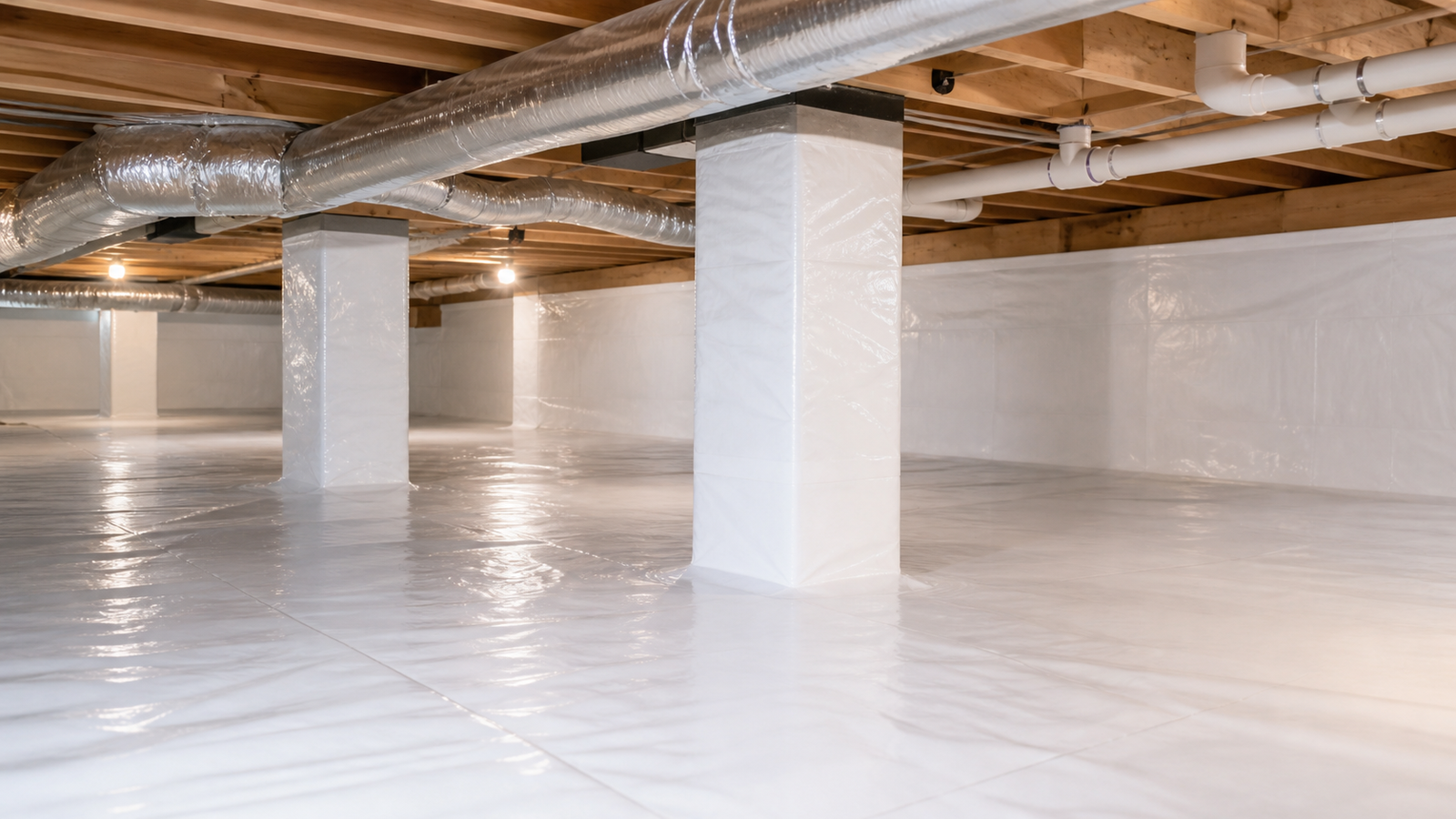
Musty crawl space smells in Birmingham homes usually start when humid air, damp soil, wet insulation, or moisture on wood framing lingers below the floor. Odor can travel upward through floor gaps, ducts, plumbing penetrations, and air leaks. Odor is a symptom, so the inspection should look for moisture sources rather than only covering the smell.
Vulcan Crawlspace Co. works with Birmingham-area homeowners who are trying to sort out crawl space moisture, drainage, vapor barrier, humidity, and repair questions without guessing at the cause. The useful starting point is a clear inspection, then a scope that matches what is actually happening under the home.
For odor issues, crawl space humidity control should be planned with air sealing, vapor control, and drainage instead of treating smell as a surface issue.
Quick Reference: Musty Smell Clues
| Odor pattern | Possible source | What to inspect |
|---|---|---|
| Smell after rain | Water or soil moisture may be rising | Drainage, vapor barrier, and wet soil |
| Smell during humid weather | Vents or air leaks may be bringing moisture in | Vents, access door, ducts, and floor gaps |
| Smell near certain rooms | Air may be moving through penetrations | Plumbing, duct, and utility openings |
| Smell with sagging insulation | Insulation may be holding moisture | Subfloor, joists, and insulation condition |
Odor Investigation Checklist
- Track when the smell is strongest
- Check whether the smell follows rain or humid weather
- Look for damp insulation, condensation, or wet soil
- Avoid masking the odor before the source is found
- Ask for inspection photos of likely moisture sources
Odor Concern Chart
| Priority level | When it fits | Best next step |
|---|---|---|
| Low | Brief odor after unusual weather | Monitor pattern |
| Medium | Recurring odor in humid months | Inspect moisture and air leakage |
| High | Odor with wet insulation, staining, or soft floors | Book a crawl space inspection |
Why does a crawl space smell musty?
Musty smells often come from damp materials, humid air, wet insulation, and organic debris. Odor does not always mean visible mold, but it does point to moisture. The plan should also account for exposed soil and open vents as common contributors. The important detail is pattern, not just one damp day. Recurring odor, condensation, or high humidity after rain or during summer weather usually means the crawl space needs a moisture-control plan instead of a quick cosmetic fix.
How does crawl space air reach the rooms above?
A good inspection should explain air movement through floor gaps, duct leaks, plumbing penetrations, and access points. Humid air entering through vents can move through the house as pressure changes. Air sealing to odor control where appropriate. The main takeaway for Birmingham-area homeowners is to connect the symptom with the cause before choosing a solution. The same visible issue can come from ground vapor, outside air, drainage, damaged insulation, or wood moisture, and each one changes the right next step.
What moisture sources should be checked when odor keeps coming back?
The review should include standing water, damp soil, failed vapor barriers, wet insulation, foundation wall moisture, and drainage issues. Sprays or surface cleaning do not fix moisture sources. A practical next step is to inspection after rain or during humid periods if odor is strongest then. The important detail is pattern, not just one damp day. Recurring odor, condensation, or high humidity after rain or during summer weather usually means the crawl space needs a moisture-control plan instead of a quick cosmetic fix.
How can encapsulation help reduce musty crawl space odors?
The review should include sealing exposed soil, closing vents where appropriate, sealing seams, reviewing insulation, and planning humidity control. Drainage issues should be corrected before relying on encapsulation. The plan should also account for dehumidifier planning when humidity remains high after sealing. The important detail is pattern, not just one damp day. Recurring odor, condensation, or high humidity after rain or during summer weather usually means the crawl space needs a moisture-control plan instead of a quick cosmetic fix.
Local Context for Birmingham-Area Homes
Local context matters when it explains the symptom a homeowner is seeing, not when it turns into a city list. In the Birmingham area, heavy rain, humid summers, shaded lots, older vented foundations, crawl space access, and yard drainage can all change how moisture shows up below a home.
For Birmingham-area homeowners, those details should guide the inspection questions: where water moves after storms, whether vents are bringing in humid air, how the lot slopes, and whether insulation, joists, piers, or soil are holding moisture. The answer still has to come from the actual crawl space, because nearby homes can have very different conditions.
Schedule a Birmingham Crawl Space Inspection
Tell Vulcan Crawlspace Co. what you are seeing below the home, and ask for an inspection or estimate before moisture, drainage, or repair issues get worse.
A good estimate should explain what was found, what needs to happen first, and whether encapsulation, waterproofing, drainage, insulation removal, repair, or dehumidifier planning belongs in the scope. That keeps the decision tied to the condition of the home, not a one-size-fits-all package.