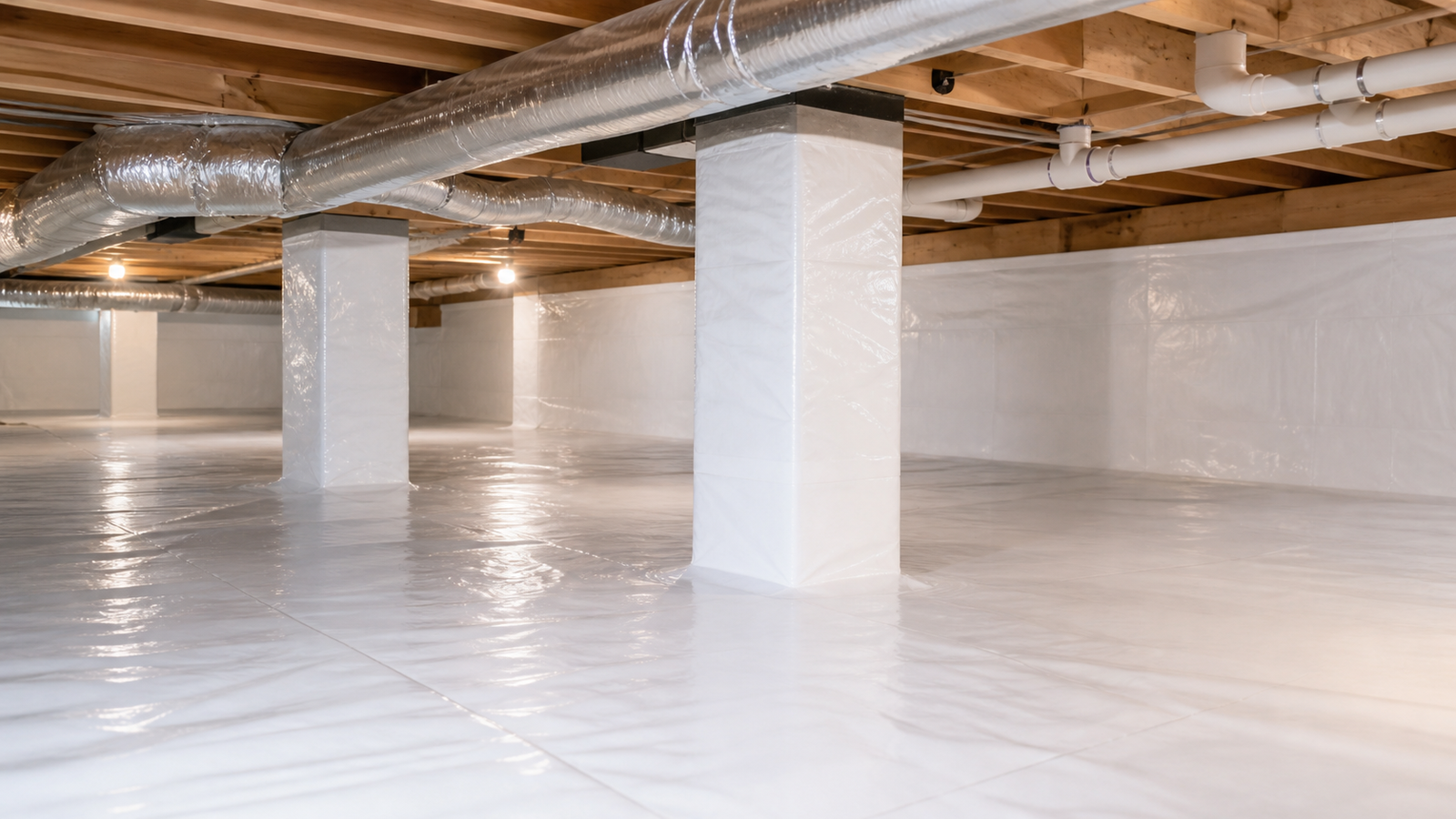
Standing water in a Birmingham crawl space usually means water is entering or collecting faster than the space can drain or dry. Encapsulation should not simply cover active water without correcting the source or providing a drainage path. Common causes include storm runoff, yard slope, short downspouts, low crawl space areas, wet soil, and foundation wall seepage.
Vulcan Crawlspace Co. works with Birmingham-area homeowners who are trying to sort out crawl space moisture, drainage, vapor barrier, humidity, and repair questions without guessing at the cause. The useful starting point is a clear inspection, then a scope that matches what is actually happening under the home.
Standing water usually needs a crawl space drainage and waterproofing review before the space is sealed.
Quick Reference: Standing Water Sources
| Water clue | Possible cause | What to check next |
|---|---|---|
| Puddles after storms | Runoff, grading, or downspout discharge | Check exterior water movement |
| Water along foundation walls | Seepage or low wall areas | Inspect walls, vents, and wall bases |
| Wet soil in low pockets | Poor drainage inside the crawl space | Review perimeter drainage and sump options |
| Wet insulation near water areas | Water or humidity is reaching floor materials | Inspect insulation and framing before sealing |
Standing Water Checklist
- Note whether water appears only after rain
- Look for washed soil, water stains, or muddy channels
- Check downspout discharge and yard slope
- Do not install a liner over active water without drainage planning
- Ask whether a sump pump needs a collection system
Water Control Priority Chart
| Priority level | When it fits | Best next step |
|---|---|---|
| Monitor | One-time dampness with no visible puddles | Recheck after the next storm |
| Inspect | Recurring puddles or water stains | Find source before encapsulation |
| Plan drainage | Standing water, washed soil, wet insulation | Drainage or sump planning comes first |
Why is standing water different from normal crawl space dampness?
Puddles show active water collection, not just humidity. Standing water can wet insulation, framing, piers, and vapor barrier edges. Repeated water should be evaluated before the space is sealed. For Birmingham-area homeowners, water control is the part of the plan that should not be guessed at. If water is still moving toward the foundation or collecting in low areas, sealing the crawl space before controlling that water can leave the same problem hidden under new materials.
Where does crawl space water usually come from after storms?
The review should include storm runoff, downspouts, clogged gutters, negative grading, foundation-wall seepage, and low crawl space pockets. Water may enter at vents, access doors, cracks, or wall bases. It helps to observe whether water appears after specific rain events. For Birmingham-area homeowners, water control is the part of the plan that should not be guessed at. If water is still moving toward the foundation or collecting in low areas, sealing the crawl space before controlling that water can leave the same problem hidden under new materials.
When does a crawl space need drainage instead of just a vapor barrier?
A vapor barrier controls ground moisture but does not remove active water. The review should include interior drains, drainage matting, discharge planning, and exterior corrections. Drainage should be designed around the water source and crawl space layout. For Birmingham-area homeowners, water control is the part of the plan that should not be guessed at. If water is still moving toward the foundation or collecting in low areas, sealing the crawl space before controlling that water can leave the same problem hidden under new materials.
When should a sump pump be considered?
Sump pumps may be used when water repeatedly collects in a low point. The inspection or estimate should also consider basin placement, discharge location, pump access, power, and maintenance. A sump pump is not automatic for every wet crawl space; it depends on how water enters, collects, and exits the area. For Birmingham-area homeowners, water control is the part of the plan that should not be guessed at. If water is still moving toward the foundation or collecting in low areas, sealing the crawl space before controlling that water can leave the same problem hidden under new materials.
Local Context for Birmingham-Area Homes
Local context matters when it explains the symptom a homeowner is seeing, not when it turns into a city list. In the Birmingham area, heavy rain, humid summers, shaded lots, older vented foundations, crawl space access, and yard drainage can all change how moisture shows up below a home.
For Birmingham-area homeowners, those details should guide the inspection questions: where water moves after storms, whether vents are bringing in humid air, how the lot slopes, and whether insulation, joists, piers, or soil are holding moisture. The answer still has to come from the actual crawl space, because nearby homes can have very different conditions.
Schedule a Birmingham Crawl Space Inspection
Tell Vulcan Crawlspace Co. what you are seeing below the home, and ask for an inspection or estimate before moisture, drainage, or repair issues get worse.
A good estimate should explain what was found, what needs to happen first, and whether encapsulation, waterproofing, drainage, insulation removal, repair, or dehumidifier planning belongs in the scope. That keeps the decision tied to the condition of the home, not a one-size-fits-all package.