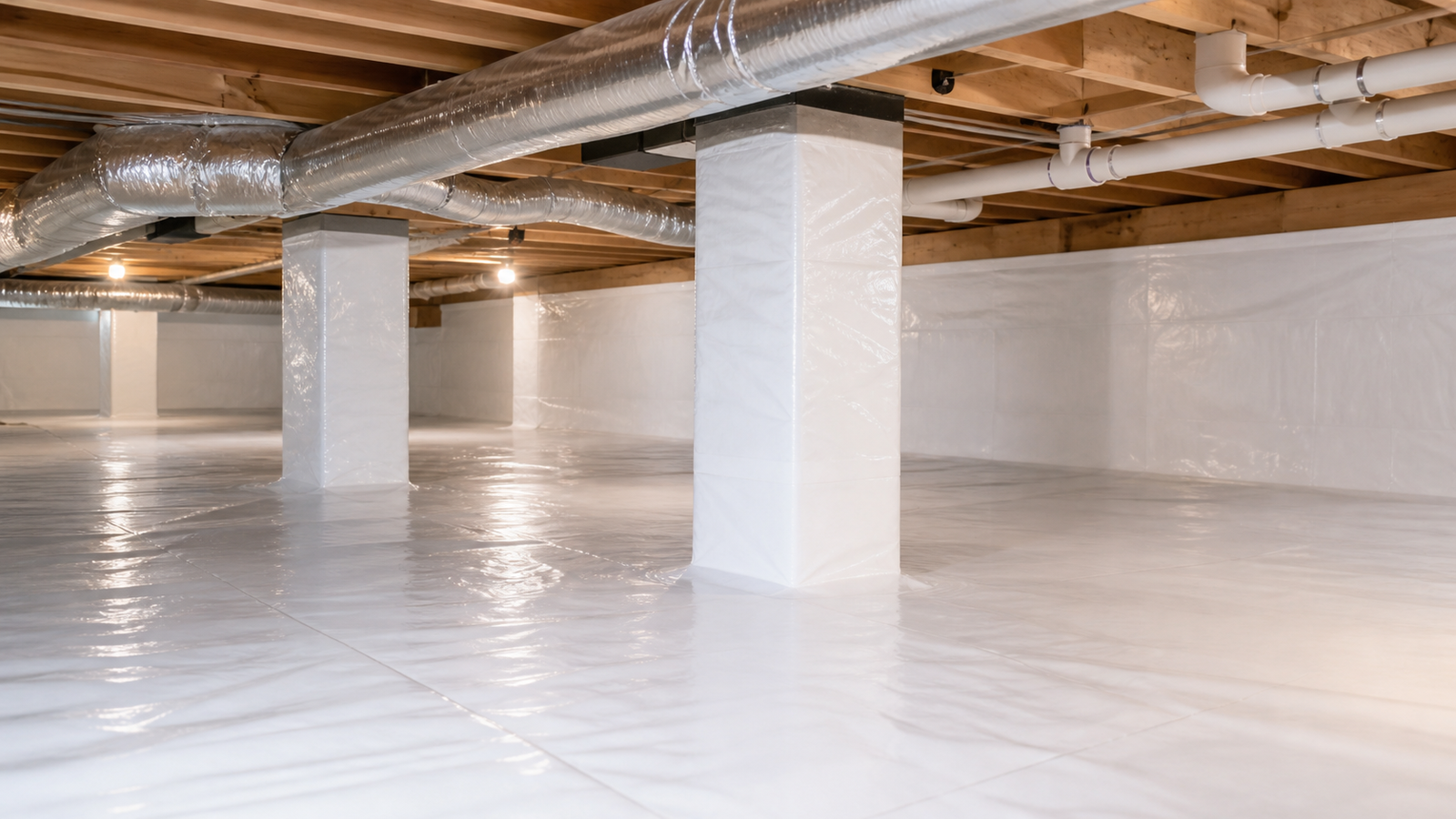
A Birmingham crawl space may need a sump pump when water collects below the home and cannot drain away by grading or passive drainage alone. A sump pump usually works with perimeter drains and a safe discharge route instead of being a standalone fix.
Vulcan Crawlspace Co. works with Birmingham-area homeowners who are trying to sort out crawl space moisture, drainage, vapor barrier, humidity, and repair questions without guessing at the cause. The useful starting point is a clear inspection, then a scope that matches what is actually happening under the home.
A sump pump decision belongs inside a broader crawl space drainage and waterproofing plan so water has a defined collection and discharge path.
Quick Reference: Sump Pump Fit
| Water pattern | Pump relevance | What else is needed |
|---|---|---|
| Water collects in one low spot | A sump pump may be useful | Collection basin and discharge route |
| Water spreads across soil | Perimeter drainage may be needed | Drainage path to the basin |
| Water comes from downspouts | Exterior correction may come first | Gutters, extensions, and grading |
| No standing water, only humidity | Pump may not solve the main issue | Vapor barrier, sealing, and humidity control |
Sump Pump Planning Checklist
- Find where water enters and collects
- Ask whether a perimeter drain feeds the basin
- Confirm discharge moves water away from the foundation
- Check power and maintenance access
- Do not treat the pump as a standalone moisture solution
Pump Priority Chart
| Priority level | When it fits | Best next step |
|---|---|---|
| Not likely | No puddles or water collection | Inspect humidity and vapor sources |
| Possible | Occasional low-area water | Review drainage layout |
| Likely part of plan | Recurring water collection after storms | Plan basin, pump, drain, and discharge together |
What signs point to needing a crawl space sump pump?
Standing water after storms or recurring puddles in low spots. Water tracks along foundation walls or piers. Saturated soil that does not dry between rain events. Efflorescence, staining, or odor tied to water intrusion. For Birmingham-area homeowners, water control is the part of the plan that should not be guessed at. If water is still moving toward the foundation or collecting in low areas, sealing the crawl space before controlling that water can leave the same problem hidden under new materials.
How does a sump pump work with perimeter drains?
Drains collect water and direct it to the sump basin. Describe basin, pump, check valve, and discharge line at a basic level. The system should move water away from the home. Poor discharge can send water back toward the crawl space. For Birmingham-area homeowners, water control is the part of the plan that should not be guessed at. If water is still moving toward the foundation or collecting in low areas, sealing the crawl space before controlling that water can leave the same problem hidden under new materials.
Can encapsulation fix standing water without a pump?
Liner material should not be used to hide active water. Discuss how standing water can damage insulation, wood, and liner seams. Drainage may be needed before vapor barrier installation. Some crawl spaces need both waterproofing and encapsulation. For Birmingham-area homeowners, water control is the part of the plan that should not be guessed at. If water is still moving toward the foundation or collecting in low areas, sealing the crawl space before controlling that water can leave the same problem hidden under new materials.
What affects sump pump placement and discharge?
Low point of the crawl space and drainage path. Foundation layout, access, and soil conditions. Discharge distance from foundation and code/practical constraints. Electrical access and pump maintenance needs should be reviewed before installation. For Birmingham-area homeowners, water control is the part of the plan that should not be guessed at. If water is still moving toward the foundation or collecting in low areas, sealing the crawl space before controlling that water can leave the same problem hidden under new materials.
When should homeowners book a water intrusion inspection?
Water remains after rain or returns repeatedly. Odors, insects, or insulation damage appear with water. Floors above the crawl space feel damp or soft. Previous DIY pumps or trenches that did not solve the issue are a sign that the water path needs a professional review. For Birmingham-area homeowners, water control is the part of the plan that should not be guessed at. If water is still moving toward the foundation or collecting in low areas, sealing the crawl space before controlling that water can leave the same problem hidden under new materials.
Local Context for Birmingham-Area Homes
Local context matters when it explains the symptom a homeowner is seeing, not when it turns into a city list. In the Birmingham area, heavy rain, humid summers, shaded lots, older vented foundations, crawl space access, and yard drainage can all change how moisture shows up below a home.
For Birmingham-area homeowners, those details should guide the inspection questions: where water moves after storms, whether vents are bringing in humid air, how the lot slopes, and whether insulation, joists, piers, or soil are holding moisture. The answer still has to come from the actual crawl space, because nearby homes can have very different conditions.
Schedule a Birmingham Crawl Space Inspection
Tell Vulcan Crawlspace Co. what you are seeing below the home, and ask for an inspection or estimate before moisture, drainage, or repair issues get worse.
A good estimate should explain what was found, what needs to happen first, and whether encapsulation, waterproofing, drainage, insulation removal, repair, or dehumidifier planning belongs in the scope. That keeps the decision tied to the condition of the home, not a one-size-fits-all package.