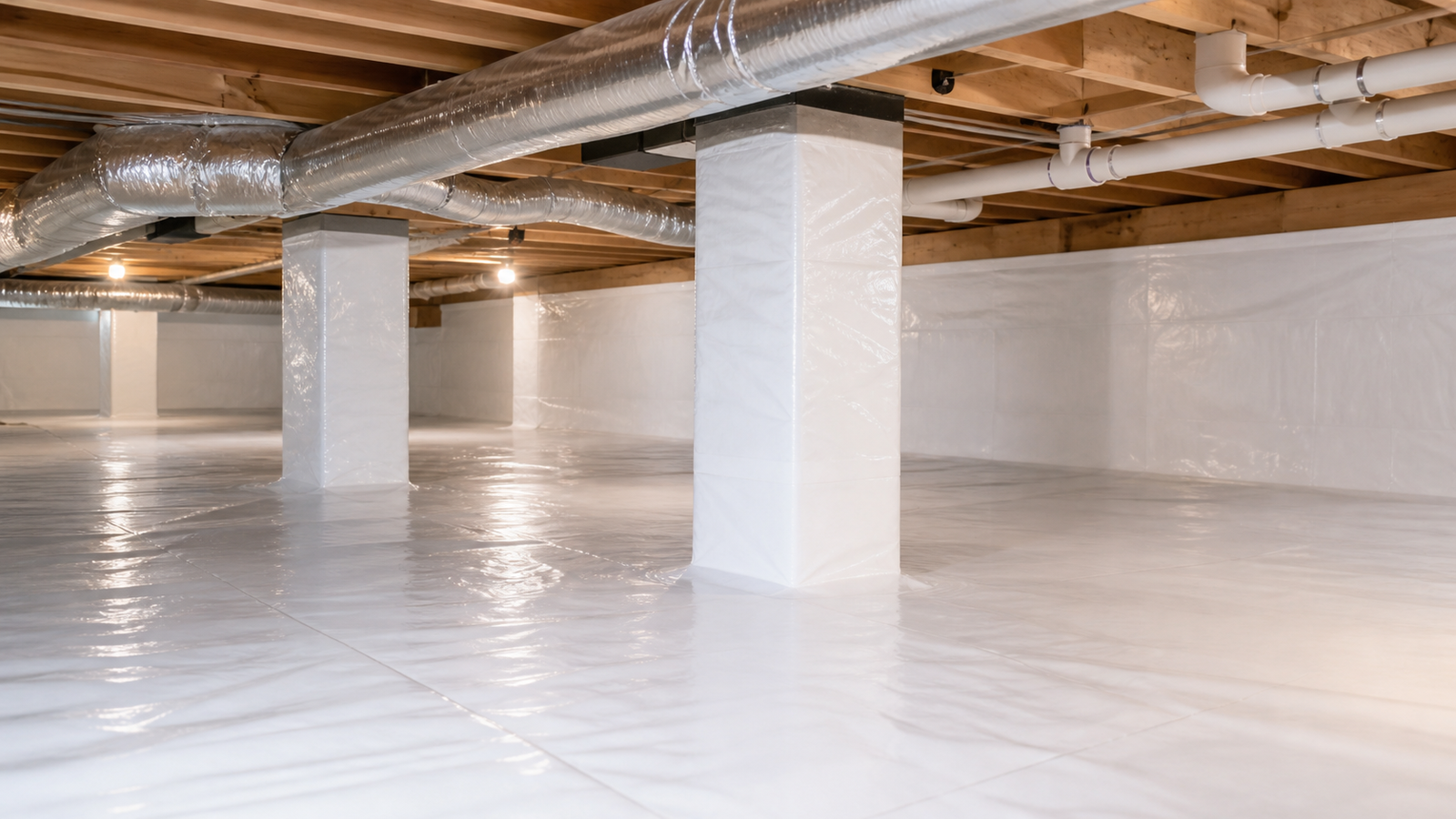
Air sealing helps limit humid outdoor air, pest entry points, and odor pathways between the crawl space and the home. It works best as part of a broader plan that includes drainage, vapor barrier installation, encapsulation, and humidity control where needed.
Vulcan Crawlspace Co. works with Birmingham-area homeowners who are trying to sort out crawl space moisture, drainage, vapor barrier, humidity, and repair questions without guessing at the cause. The useful starting point is a clear inspection, then a scope that matches what is actually happening under the home.
Air sealing works best inside a complete crawl space encapsulation plan that also addresses vapor, drainage, and humidity control.
Quick Reference: Air Sealing Targets
| Gap or opening | What it can affect | What to inspect |
|---|---|---|
| Open vents | Humid air, odors, pests, debris | Vent treatment and full moisture plan |
| Access door gaps | Outdoor air and pests | Door fit, sealing, and drainage near entry |
| Rim joist gaps | Air movement into living space | Air sealing and insulation condition |
| Utility penetrations | Odor and air pathways | Plumbing, duct, and wiring openings |
Air Sealing Checklist
- Identify air paths before sealing randomly
- Check vents, access doors, rim joists, and penetrations
- Address water and debris before sealing tight areas
- Do not promise pest elimination from sealing alone
- Pair air sealing with vapor and humidity control
Air Path Priority Chart
| Priority level | When it fits | Best next step |
|---|---|---|
| Low | Small gaps with dry crawl space | Seal during planned maintenance |
| Medium | Odor, humidity, or pest clues near openings | Inspect and seal as part of moisture plan |
| High | Open vents plus wet soil or insulation | Plan encapsulation, drainage, and air sealing together |
What does crawl space air sealing include?
Crawl space vents and foundation openings. Gaps around pipes, wires, ducts, and rim areas. Cracks or holes that allow outdoor air or pests inside. Transitions between liner, wall, and framing areas when encapsulated. The important detail is pattern, not just one damp day. Recurring odor, condensation, or high humidity after rain or during summer weather usually means the crawl space needs a moisture-control plan instead of a quick cosmetic fix.
How does air sealing help with Birmingham humidity?
Humid air entering a cooler crawl space can condense. Air leaks make dehumidifiers work harder after encapsulation. Sealed gaps help keep the crawl space environment more controlled. Air sealing pairs with vapor barrier and drainage work. The important detail is pattern, not just one damp day. Recurring odor, condensation, or high humidity after rain or during summer weather usually means the crawl space needs a moisture-control plan instead of a quick cosmetic fix.
Can air sealing reduce musty odors inside the house?
Odors can travel through floor gaps, ducts, chases, and penetrations. Damp insulation and soil moisture can make odors worse. Sealing helps reduce pathways but does not remove the moisture source. Inspection should look for water, pests, and decayed materials. The important detail is pattern, not just one damp day. Recurring odor, condensation, or high humidity after rain or during summer weather usually means the crawl space needs a moisture-control plan instead of a quick cosmetic fix.
Does air sealing help keep pests out?
Open vents and foundation gaps can become entry points. Moist crawl spaces can attract insects and nesting activity. Sealing reduces access but may need to follow cleanup and repair. Pest improvement should be tied to actual entry points and moisture findings, not promised from sealing alone. The important detail is pattern, not just one damp day. Recurring odor, condensation, or high humidity after rain or during summer weather usually means the crawl space needs a moisture-control plan instead of a quick cosmetic fix.
When should air sealing be done with encapsulation?
Address standing water and drainage first. Install or repair vapor barrier and seal liner transitions. Seal vents and penetrations as part of controlled crawl space air. Add dehumidifier planning if humidity remains high. The important detail is pattern, not just one damp day. Recurring odor, condensation, or high humidity after rain or during summer weather usually means the crawl space needs a moisture-control plan instead of a quick cosmetic fix.
Local Context for Birmingham-Area Homes
Local context matters when it explains the symptom a homeowner is seeing, not when it turns into a city list. In the Birmingham area, heavy rain, humid summers, shaded lots, older vented foundations, crawl space access, and yard drainage can all change how moisture shows up below a home.
For Birmingham-area homeowners, those details should guide the inspection questions: where water moves after storms, whether vents are bringing in humid air, how the lot slopes, and whether insulation, joists, piers, or soil are holding moisture. The answer still has to come from the actual crawl space, because nearby homes can have very different conditions.
Schedule a Birmingham Crawl Space Inspection
Tell Vulcan Crawlspace Co. what you are seeing below the home, and ask for an inspection or estimate before moisture, drainage, or repair issues get worse.
A good estimate should explain what was found, what needs to happen first, and whether encapsulation, waterproofing, drainage, insulation removal, repair, or dehumidifier planning belongs in the scope. That keeps the decision tied to the condition of the home, not a one-size-fits-all package.